
Heel spur · San Diego
Heel Spur Pain? Why the Spur Usually Isn’t the Problem, and What Helps
You saw the spur on the X-ray, so it makes sense to blame it. But for most people, the spur isn’t what hurts. The tissue around it is, and that’s good news, because tissue can heal.
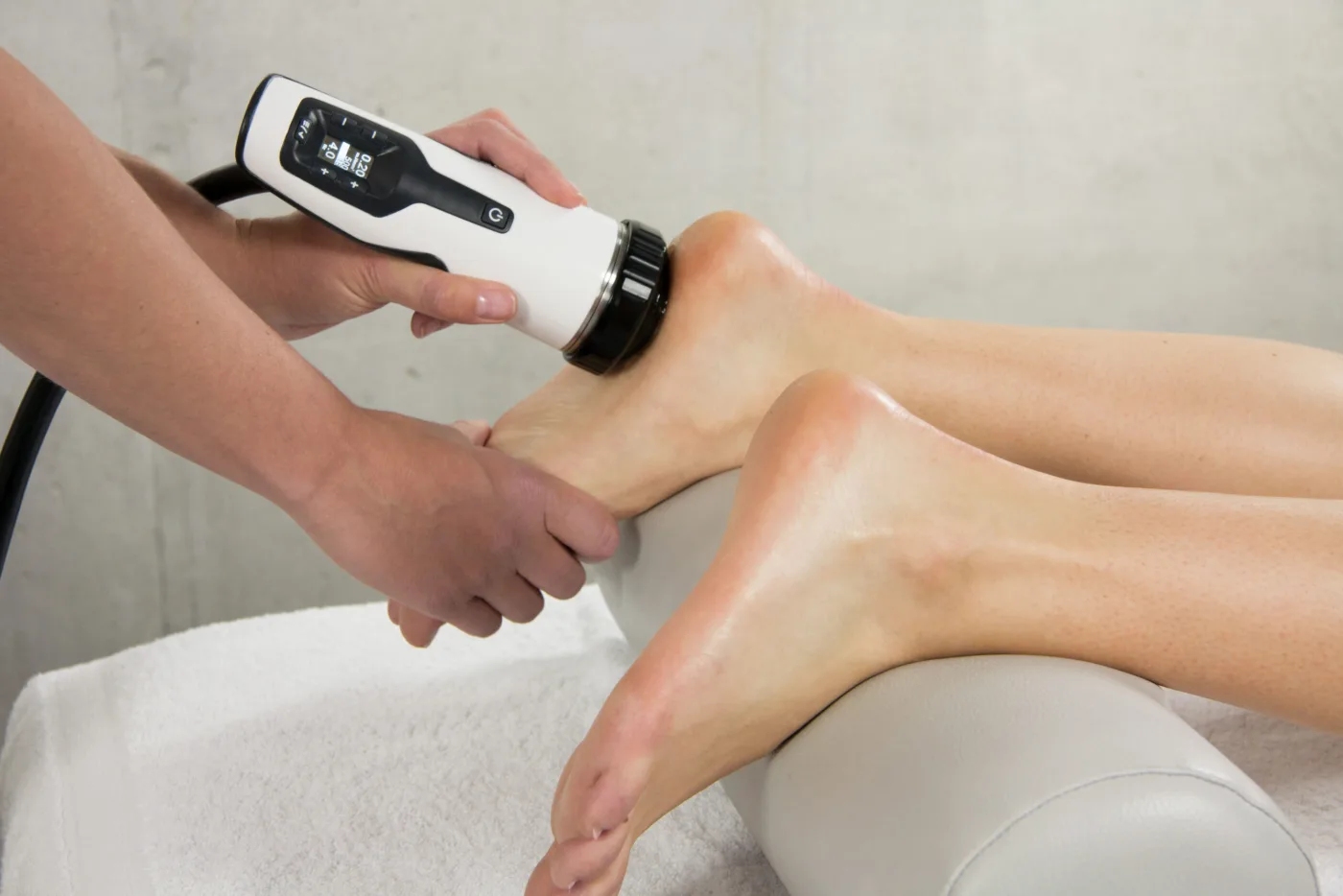
What a heel spur actually is
A heel spur is a small ridge of extra bone on the underside of the heel bone, right where the thick band along the bottom of your foot (the plantar fascia) attaches. It builds up slowly over years of that band pulling on the bone.
Heel spurs are very common. Plenty of people have one on an X-ray and never feel a thing. When the heel does hurt, the pain usually comes from the irritated tissue where the band meets the bone, not from the spur itself. That’s why heel spur pain and plantar fasciitis so often go together.
Signs it’s the classic heel spur pain
- Sharp pain under the heel with your first steps in the morning
- The same pain when you stand up after sitting for a while
- It eases a little once you get going, then aches again later in the day
- A tender spot on the bottom of the heel, toward the front
- Worse after long periods of standing or walking on hard floors
Do you need the spur removed?
Usually not. Because the spur is rarely the source of the pain, most people get better without surgery once the irritated tissue settles and the foot and calf get stronger. Surgery is generally saved for the small number of people who still have pain after a long stretch of good care.
Why heel pain hangs around
- Rest, ice and new insoles calm it for a while, but nothing changes the load on the heel
- A cortisone shot quiets the pain for a few weeks, then it comes back
- Tight calves and weak foot muscles keep pulling on the same spot
- Long hours on your feet, hard floors or worn-out shoes keep irritating it
- The tissue has stalled: it’s been sore so long that it has stopped repairing itself
How we help heel spur pain
First comes an assessment: where exactly it hurts, how you walk and stand, your shoes, your calves and feet, and what your days look like. Then we build a plan that takes the strain off the heel and builds strength in your calf and foot, so the tissue can heal and stay healed.

Alongside the plan, we use regenerative tools that are designed to support your body’s own repair process. We have focused shockwave, radial shockwave and EMTT, and we’re the only clinic in San Diego with all three.


What each one does
Focused shockwave sends sound-wave energy to a precise point under the heel. Long-lasting heel pain is one of the most researched uses of shockwave therapy.
Radial shockwave spreads energy over a wider area. It’s useful for the arch and the calf, which are often tight and overworked in people with heel pain.
EMTT (extracorporeal magnetotransduction therapy) uses a pulsed magnetic field that passes deep into the body. It is designed to support cell activity and circulation in the treated area.
One thing to know: none of these dissolve the spur. They work on the irritated tissue around it, which is usually what hurts. Results vary from person to person, and they work best as part of a plan.
Pain at the back of the heel?
A bump or spur at the back of the heel, where the Achilles tendon attaches (sometimes called a Haglund’s bump), is a different problem with a different plan. If that sounds like you, mention it on your call and we’ll look at it as an Achilles problem.
When to see your doctor first
- The heel pain started after a fall or a hard landing
- You can’t put weight on it
- There is numbness, tingling or burning in the foot
- The heel is red, hot or swollen, or you have a fever
- Pain at night or at rest that isn’t linked to activity
- Both heels hurt along with pain in other joints
If we see any of these at your visit, we’ll tell you and point you to the right kind of doctor.
Heel pain that came on gradually from more walking or running can sometimes be a stress fracture instead. Our stress fracture guide explains the difference. If your heel pain started with one knock or fall, read our bone bruise guide.
Dr. Chris Garcia, PT, DPT, SCS, CSCS, USAW
Residency-trained sports physical therapy specialist and founder of Sports Performance. He has been helping people heal with regenerative therapy since 2008, and he builds the plan our team follows for every client.
Find out what’s really behind your heel pain
Book a free discovery call. We’ll ask about your heel, tell you whether we can help, and explain what a plan would look like.
Book a free discovery call →Or call (619) 397-1391.
Shockwave and EMTT are not appropriate for every patient or every condition. Always consult a qualified provider about your own situation.