
Stress fracture · San Diego
Stress Fracture Still Sore? How to Heal It and Keep It From Coming Back
A stress fracture isn’t one big injury. It’s a small crack that builds up from repeated load. It heals when load and recovery get back in balance, and it can come back if they don’t.
What a stress fracture actually is
Your bones are always being broken down and rebuilt. That’s how they get stronger. When the load on a bone goes up faster than it can rebuild, the bone gets irritated first (a “stress reaction”), and if the load keeps coming, a small crack forms.
It usually follows a change: a new walking or running routine, more miles, more hours on your feet at work, new shoes, a vacation full of walking, or a return to an old sport. The most common spots are the bones of the foot, the shin, the heel and the hip.
Signs you may have one
- Pain that starts during activity and builds the longer you go
- An ache that lingers afterward and slowly gets worse week to week
- A small spot on the bone that is tender to press
- Swelling on the top of the foot or over the shin
- Pain that used to come late in a walk and now comes early
A stress fracture doesn’t always show on an X-ray in the first few weeks. If it sounds like you, get it checked properly.
Some stress fractures need a doctor first
A few locations heal poorly or carry a higher risk of the crack getting worse. These need a doctor’s care before any rehab: the hip or upper thigh bone (often felt as groin pain), the navicular bone in the middle of the foot, the front of the shin, and the outside edge of the foot near the base of the fifth toe bone.
If your pain is in one of those spots, or you have never had it imaged, see your doctor first. We work alongside your doctor, not instead of them.
Why some stress fractures drag on
- Going back to full activity as soon as the pain fades, before the bone is ready
- Never fixing what caused it: strength, how you load your feet and legs, a sudden jump in activity, or footwear
- Not enough food, rest or sleep to rebuild bone
- Bone health factors your doctor may want to check, such as vitamin D, bone density or hormones
This is why so many people heal once and then get a second one. The crack mended, but the reason it happened never changed.
How we help a stress fracture heal
We start with an assessment: where it hurts, how it started, how you walk and stand, and what you want to get back to. Then we build a step-by-step plan. It usually moves through four stages:
- Calming it down: protecting the bone while you keep moving safely
- Getting moving again: bringing back walking and standing a little more each week
- Building strength: in the feet, legs and hips, so the bone isn’t taking all the load
- Back to normal, then back to what you love: a gradual return to walking, hiking, golf, tennis or whatever you came in for

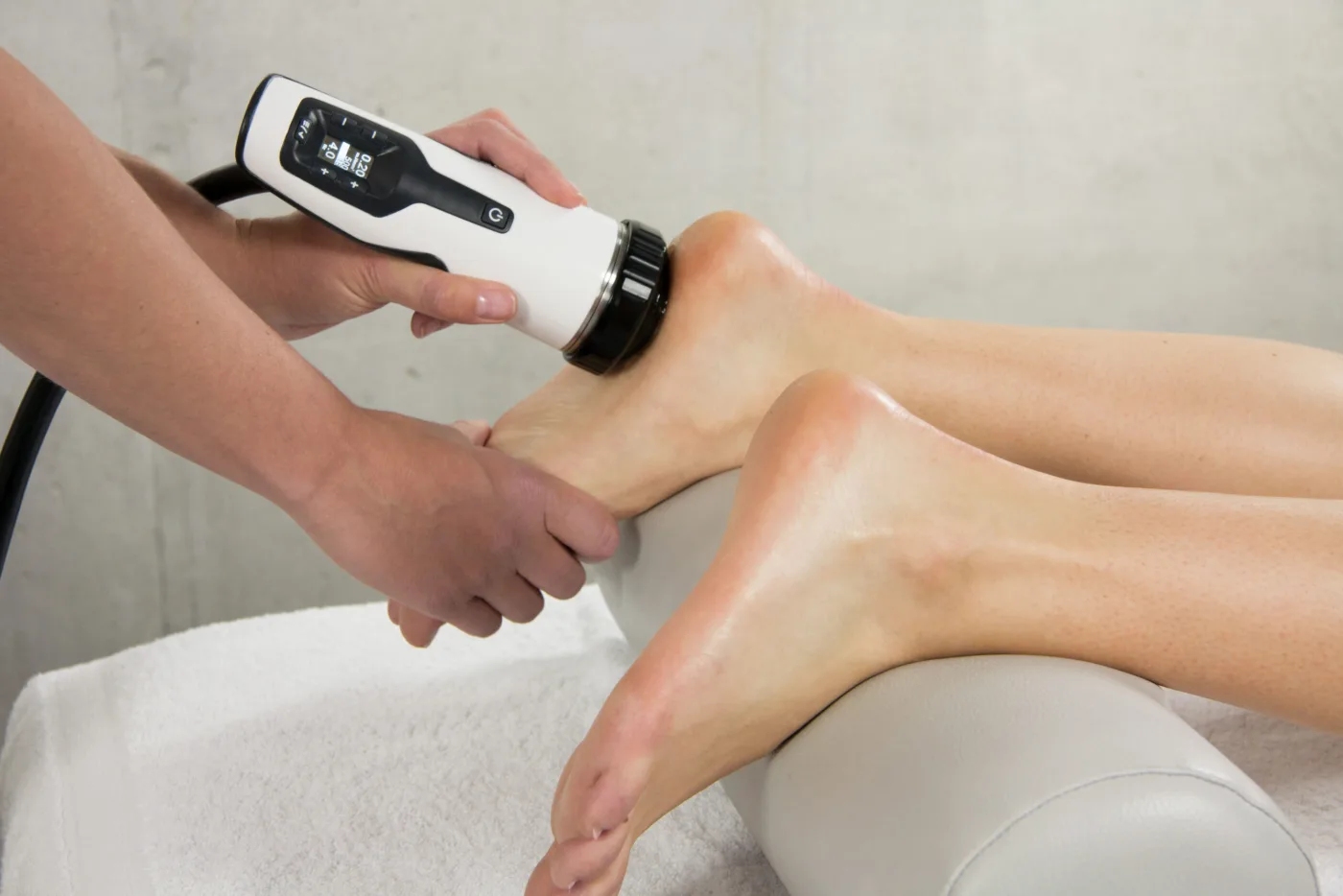
Alongside the plan, we use regenerative tools that are designed to support your body’s own repair process. We have focused shockwave, radial shockwave and EMTT, and we’re the only clinic in San Diego with all three.


What each one does
Focused shockwave sends sound-wave energy to a precise point and can reach bone. It has the longest research history of the three for fractures that are slow to heal.
EMTT (extracorporeal magnetotransduction therapy) uses a pulsed magnetic field that passes deep into the body. It is designed to support cell activity and circulation in the treated area.
Radial shockwave covers a wider, shallower area. It helps with the calf, foot and shin muscles that often tighten up while you’ve been protecting the injury.
Results vary from person to person, and these tools are not right for every fracture. Your assessment decides whether they belong in your plan.
When to see your doctor first
- You can’t put weight on it, or you’re limping badly
- The pain is in one of the higher-risk spots listed above
- Pain at rest or at night that keeps getting worse
- This is your second or third stress fracture, which is worth a look at bone health
Not sure if it’s a fracture or a bruise?
If your pain started with one knock, fall or twist rather than building up over time, it may be a bone bruise. Read our bone bruise guide.
Sharp heel pain with your first steps in the morning? See our heel spur guide.

Dr. Chris Garcia, PT, DPT, SCS, CSCS, USAW
Residency-trained sports physical therapy specialist and founder of Sports Performance. He has been helping people heal with regenerative therapy since 2008, and he builds the plan our team follows for every client.
Get a plan for your stress fracture
Book a free discovery call. We’ll ask how it started, tell you whether we can help, and explain what your plan would look like.
Book a free discovery call →Or call (619) 397-1391.
Shockwave and EMTT are not appropriate for every patient or every condition. Always consult a qualified provider about your own situation.